



How to Choose the Best Plastic Shower for Global Sourcing?
Choosing the best Plastic Shower for global sourcing requires more than comparing catalog photographs and quoted prices. Buyers must examine material quality, supplier capability, testing records, packaging, and after-sales support. A polished product can still fail after repeated exposure to hot water, pressure changes, and aggressive cleaning agents.
Maria Chen, a bathroom hardware sourcing specialist with over fifteen years of supplier-audit experience, says, “A dependable shower starts with verified materials, not attractive samples.” Her observation captures a common purchasing mistake. A sample may feel sturdy in the hand, yet its internal parts can remain untested. Responsible buyers should request resin specifications, component drawings, pressure-test results, and production samples from the same manufacturing line.
Look closely at practical details. Does the hose connection resist cross-threading? Can mineral deposits be removed easily? Are seals still flexible after heat testing? These small points affect returns, reviews, and long-term brand trust. Supplier evaluation should also include factory visits, process audits, inspection plans, and clear communication records. Certifications matter, but they should support testing rather than replace it.
Global sourcing is rarely perfect. Delivery forecasts can shift, and one inspection cannot reveal every future problem. That reality deserves honest planning. Start with a controlled trial order, define acceptable defect limits, and monitor early customer feedback. Cost remains important, but the cheapest Plastic Shower may create higher expenses through replacements, delays, and damaged reputation. A reliable choice balances performance, documentation, production consistency, and realistic commercial risk.
Define the Requirements for a Plastic Shower Product
How to Choose the Best Plastic Shower for Global Sourcing?
Define the Requirements for a Plastic Shower Product
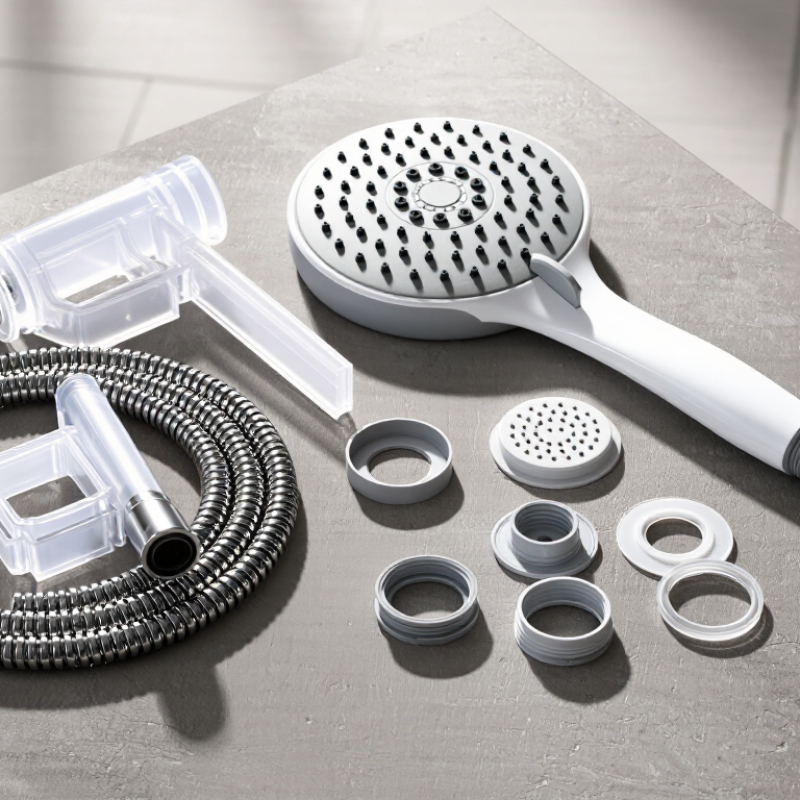
A reliable plastic shower project starts with a precise product brief. Define the shower type, dimensions, connection size, spray pattern, and intended water pressure. Specify the plastic grade, surface finish, color tolerance, and resistance to heat, moisture, and cleaning chemicals. A matte surface may hide scratches better, while a polished finish can look more attractive but show marks quickly. Consider the user’s hand size and grip comfort. Small details affect daily satisfaction.
Request technical drawings, material declarations, sample units, and inspection records before approving production. Confirm packaging dimensions, carton strength, labeling needs, minimum order quantity, and delivery schedule. Test samples under repeated water flow and temperature changes. Regional requirements may differ, so verify applicable product and packaging standards with qualified local professionals. I have learned that buyers often focus on appearance and overlook drainage performance. That mistake becomes expensive after production.
Tips: Ask the supplier to mark every critical measurement on the sample. Compare at least two production samples, not only photographs. Record spray coverage, leakage points, surface defects, and assembly force. Allow room for improvement. Some requirements may sound clear until users test the product. A short trial can reveal an uncomfortable grip or weak connection that paperwork misses.
How to Choose the Best Plastic Shower for Global Sourcing? - Define the Requirements for a Plastic Shower Product
| Requirement Category | Product Dimension | Recommended Specification | Practical Sourcing Data | Why It Matters | Verification Method |
|---|---|---|---|---|---|
| Application | Shower Type | Handheld shower, fixed shower, or dual-function set | Define whether the product includes a hose, wall holder, diverter, slide bar, or overhead shower. | Different configurations affect tooling, assembly, packaging, and installation requirements. | Review a detailed product specification sheet and an approved pre-production sample. |
| Material | Main Body Plastic | ABS or polypropylene suitable for hot-water plumbing applications | ABS is commonly selected for rigid, impact-resistant housings; polypropylene offers good chemical and heat resistance. | The resin influences durability, appearance, weight, processability, and cost. | Request the material grade, technical data sheet, and batch-level material declaration. |
| Material | Elastomer Components | EPDM or silicone seals and spray nozzles, subject to application testing | Use elastomers that remain flexible after repeated exposure to hot water, cleaning agents, and limescale. | Seal performance directly affects leakage, flow stability, and service life. | Conduct repeated hot-water cycling, compression-set, and leakage tests. |
| Thermal Performance | Operating Temperature | Specify a continuous operating range, commonly up to approximately 60°C for household shower use | Set separate limits for normal operation, short-term exposure, storage, and transport. | Temperature requirements help prevent deformation, cracking, and seal failure. | Test the assembled shower under controlled hot-water cycles and inspect for deformation. |
| Pressure | Working and Test Pressure | Define the intended working pressure and require a higher proof-pressure level according to the target market standard | Residential water pressure varies by country and building system; do not use one pressure assumption globally. | Correct pressure limits reduce the risk of leakage, burst failure, and poor spray performance. | Perform hydrostatic, burst, and connection leakage tests using calibrated equipment. |
| Water Performance | Flow Rate | Set a market-specific target, such as approximately 6–9 litres per minute for a water-saving design | Measure flow at more than one inlet pressure and at both cold- and hot-water conditions where applicable. | Flow rate affects user comfort, water consumption, local compliance, and packaging claims. | Measure litres per minute with a calibrated flow meter and record inlet pressure. |
| Spray Quality | Spray Pattern | Uniform coverage without excessive splashing, dead zones, or irregular jets | Specify the number of spray modes, jet arrangement, spray angle, and acceptable variation between units. | Spray quality is a key user-perceived performance factor and can reveal internal molding problems. | Compare samples at defined pressure and flow conditions using visual and measured checks. |
| Usability | Controls and Handling | Easy-to-turn mode selector with a secure, non-slip grip | Define operating torque, grip texture, button size, and accessibility requirements. | Good ergonomics reduce complaints and improve use by children, older users, and people with limited hand strength. | Conduct user trials, torque testing, and repeated selector-cycle testing. |
| Connections | Inlet and Hose Compatibility | Use the thread size and connection profile required by the destination market | Common shower connections may use different nominal thread standards; confirm size, pitch, gasket type, and adapter needs. | Thread incompatibility can prevent installation even when the shower itself performs correctly. | Check thread gauges, mating components, gasket compression, and installation samples. |
| Safety | Water-Contact Materials | Use materials and coatings that satisfy the applicable drinking-water or sanitary-product requirements | Requirements differ between jurisdictions and may address lead, restricted substances, odour, taste, and extractables. | Compliance protects users and prevents customs, retail, and liability problems. | Obtain laboratory reports from an appropriately accredited testing body for the target market. |
| Surface Finish | Appearance and Limescale Resistance | Smooth, uniform surface with no visible sink marks, flash, cracks, or colour variation | For coated or plated parts, define coating thickness, adhesion, colour tolerance, and corrosion resistance. | Surface defects reduce perceived quality and may create areas where deposits accumulate. | Use visual inspection, coating adhesion checks, accelerated corrosion testing, and limescale cleaning trials. |
| Durability | Mechanical Life | Specify cycle targets for selectors, buttons, swivel joints, and hose connections | A practical qualification plan should include repeated operation, installation removal, impact, and pressure cycling. | Durability testing identifies failures that may not appear during a short visual inspection. | Approve a written test plan with pass/fail criteria before mass production. |
| Manufacturing | Mold and Process Control | Stable injection-molding process with controlled dimensions and documented inspection points | Monitor critical dimensions, gate marks, weld lines, flash, warpage, colour, and assembly fit. | Process variation can cause leakage, inconsistent spray patterns, and difficult assembly. | Review control plans, first-article measurements, capability data, and production inspection records. |
| Packaging | Export Packaging | Protective individual packaging with moisture-resistant outer cartons and clear installation information | Specify carton dimensions, maximum carton weight, drop-test requirements, barcode format, and packing quantity. | Efficient packaging reduces transport damage, storage cost, and avoidable logistics claims. | Conduct carton drop, vibration, compression, and transit simulation tests where required. |
| Documentation | Technical and Compliance File | Complete product drawings, bill of materials, test reports, inspection criteria, and installation instructions | Include revision control, material declarations, country-of-origin information, warranty terms, and spare-part details. | Accurate documentation supports customs clearance, product registration, quality control, and after-sales service. | Use a document checklist and approve only controlled, revision-matched files. |
| Commercial | Minimum Order and Lead Time | Agree on separate quantities and lead times for samples, pilot production, and repeat orders | Confirm tooling charges, sample approval timing, production capacity, holiday shutdowns, and shipment terms. | Commercial clarity helps prevent unexpected delays and inventory gaps during global sourcing. | Include all agreed specifications, tolerances, delivery dates, and remedies in the purchase contract. |
| Quality Assurance | Inspection Standard | Use an agreed sampling plan with critical, major, and minor defect classifications | Define zero-tolerance defects for leakage, sharp edges, missing components, incorrect materials, and safety-related failures. | A consistent inspection standard makes supplier performance measurable across different production batches. | Perform pre-production, during-production, and pre-shipment inspections against an approved golden sample. |
Note: Pressure, temperature, flow-rate, material, and compliance requirements should be confirmed against the regulations and plumbing conditions of each destination market before final approval.
Related Posts
-

The Rise of Eco Friendly Plastic Showers in Sustainable Bathroom Renovations
-

2026 How to Choose the Best Plastic Shower for Your Bathroom?
-

Top 10 Benefits of Using Plastic Showers for Your Bathroom?
-

Top Tips for Choosing the Best Plastic Shower Options?
-
Top 10 Tips for Choosing the Best Plastic Shower Solutions?
-

Top Quality Plastic Shower Products for Global Buyers?