What Are the Top 10 Types of ABS Showers?
page_banner

What Are the Top 10 Types of ABS Showers?

A modern shower is more than a water outlet. It shapes comfort, cleaning performance, installation cost, and daily water consumption. This guide examines the top 10 types of Abs Shower systems, from fixed wall-mounted designs to handheld, rainfall, thermostatic, and multi-function models.

The U.S. Environmental Protection Agency reports that showering represents nearly 17% of residential indoor water use. WaterSense-labeled showerheads must deliver no more than 2.0 gallons per minute, compared with the federal standard of 2.5 gallons. These figures make spray control and flow efficiency important selection factors. They also show why material choice matters. ABS plastic is lightweight, corrosion-resistant, and often easier to install than metal. Still, heat tolerance, surface quality, fittings, and long-term maintenance deserve careful attention.

Peter Gleick, co-founder of the Pacific Institute, has described water as “a human right.” That principle gives shower design a wider meaning. A useful Abs Shower should feel comfortable without wasting avoidable water. Industry research from Grand View Research also indicates continuing demand for bathroom fixtures that combine convenience, hygiene, and efficient resource use. However, market reports rarely separate ABS shower products from the wider shower fixture category. That limitation should be acknowledged. A perfect ranking does not exist.

The following overview compares each type by spray pattern, installation method, user experience, cleaning needs, and practical durability. Some categories overlap. That is normal. A handheld model may also include rainfall and massage settings. The best choice depends on water pressure, bathroom layout, household needs, and realistic maintenance habits.
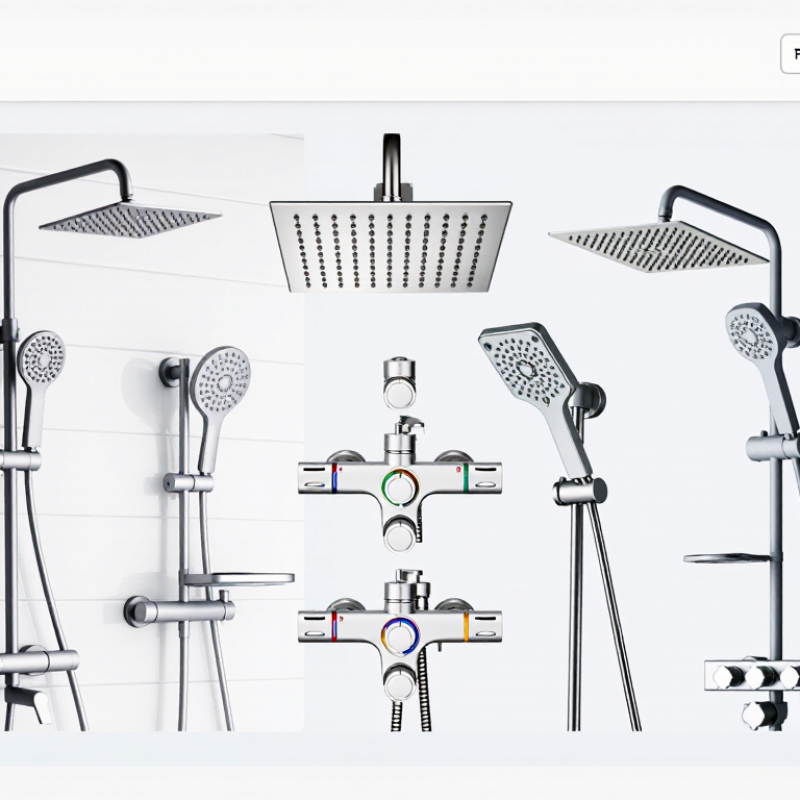
What Are the Top 10 Types of ABS Showers?

ABS Shower Basics and Key Material Properties

ABS shower systems are chosen for shape, access, and installation conditions. The ten common types include alcove, corner, neo-angle, rectangular, square, curved, round, walk-in, barrier-free, and tub-shower designs. Their forms affect drainage, door clearance, cleaning effort, and movement inside the enclosure. A compact neo-angle unit may suit a narrow bathroom. A barrier-free model needs more careful floor planning.

ABS means acrylonitrile butadiene styrene, a thermoplastic valued for its low weight and impact resistance. MatWeb technical data commonly lists ABS density near 1.04 g/cm³, with water absorption often below 1% after 24 hours. That helps explain its practical handling and limited moisture uptake.

It does not make ABS waterproof in every assembly. Seams, fasteners, and wall joints still deserve inspection. The American Society for Testing and Materials uses ASTM D256 for impact testing and ASTM D648 for heat-deflection testing, giving installers useful comparison points.

A 2024 Grand View Research market report estimated the global ABS market at roughly 29 billion U.S. dollars in 2023. Demand reflects automotive, electrical, and construction applications, not showers alone. That distinction matters. A material’s popularity is not proof of equal bathroom performance.

In field use, I would check panel thickness, reinforcement, surface finish, and temperature limits before selecting a type. Dark finishes can reveal scratches more easily. Glossy walls can show soap residue. I have found that “easy-clean” claims are sometimes too neat; daily ventilation and accurate installation still decide the result.

How ABS Showers Are Classified by Design and Installation

What are the top 10 types of ABS showers?

Classification becomes clearer when design and installation are separated.

Popular design types

include square, rectangular, quadrant, neo-angle, and alcove showers. Square units suit compact bathrooms, while rectangular bases provide more elbow room. Quadrant models fit curved corners. Neo-angle designs save space with angled fronts. Alcove showers use three surrounding walls. ABS is lightweight, moisture-resistant, and easier to handle than many heavier materials.

Installation creates five more practical categories

one-piece showers, multi-panel systems, direct-to-stud units, adhesive wall-panel systems, and retrofit kits. One-piece models reduce seams but may not pass through narrow doorways. Multi-panel systems are easier to transport and replace. Direct-to-stud installation exposes framing before wall panels are secured. Adhesive systems can work over suitable, stable surfaces. Retrofit kits help update an existing bathroom, though uneven walls can create visible gaps. These categories overlap. A neo-angle shower, for example, may also be a multi-panel system.

Tips: Measure the doorway, wall width, drain position, and ceiling height before ordering. Check the subfloor for movement. Even a small flex can damage seals over time. Follow the manufacturer’s installation instructions and use compatible sealants. A level base matters more than appearance. This is easy to underestimate. Some classifications are not universal, so confirm the product’s actual dimensions and installation method before cutting materials.

Ten Common Types of ABS Showers and Their Main Features

What Are the Top 10 Types of ABS Showers?

ABS showers are valued for their light weight, impact resistance, and simple cleaning routine. The ten common types differ mainly in layout, access, and spray style. A standard alcove shower fits between three walls and suits compact bathrooms. A corner shower saves floor space with two finished sides. A neo-angle shower uses angled panels and creates a sharper, modern footprint. A freestanding shower offers flexible placement but needs careful plumbing preparation.

A low-threshold shower reduces the step into the enclosure. A roll-in shower removes the raised entry and supports wheelchair access when the room is correctly planned. A shower-tub combination serves households that need both bathing and showering. A handheld shower uses a flexible hose for easier rinsing, cleaning, and seated use. A rainfall shower delivers water from above and feels gentle, though it may rinse thick hair less efficiently. A multi-spray shower combines overhead, handheld, and body sprays, but it usually needs stronger water flow.

In practical installations, ABS panels feel warm underfoot compared with tile. They also have fewer grout lines to scrub. Check panel thickness, joint quality, drainage, and repair access before choosing a unit. Poor leveling can cause standing water near the edge. That detail is easy to miss. “Waterproof” also does not mean “maintenance-free.” Seals still need inspection, especially around the door and drain. The best type depends on room size, user mobility, water pressure, and everyday habits.

What Are the Top 10 Types of ABS Showers? - Ten Common Types of ABS Showers and Their Main Features

No. ABS Shower Type Typical Configuration Main Features Common Applications Important Considerations
1 One-Piece ABS Shower Stall A molded shower base, walls, and threshold formed as one integrated unit. Few seams, quick cleaning, good moisture resistance, and a relatively simple installation when the unit fits through the access route. New construction, modular buildings, dormitories, and renovation projects with adequate bathroom access. The finished unit is less flexible during delivery and may be difficult to move through narrow doors or stairways.
2 Multi-Piece ABS Shower Kit Separate shower base, wall panels, corner sections, and trim assembled on site. Easier transportation, more installation flexibility, and suitability for replacement work in existing bathrooms. Remodeling projects, apartments, narrow corridors, and bathrooms where a one-piece unit cannot be transported. Panel joints must be aligned, supported, and sealed correctly to prevent water intrusion.
3 Corner ABS Shower A compact enclosure installed where two bathroom walls meet, often with a square or rounded front. Uses an otherwise unused corner, reduces the shower footprint, and can include built-in shelves or a seat. Small bathrooms, guest bathrooms, utility spaces, and compact residential layouts. Interior clearance and door swing should be checked carefully before installation.
4 Neo-Angle ABS Shower A corner shower with a five-sided base and a clipped front corner. Provides a practical corner layout while creating a more open entry than many square enclosures. Small and medium bathrooms where floor space and entry access are important. The angled front requires accurate wall measurements and compatible door hardware.
5 Alcove ABS Shower A rectangular unit fitted between three finished walls, normally with a front door or curtain. Makes efficient use of a standard recess, offers several width options, and can be combined with wall storage. Standard bathroom recesses, replacement shower areas, and family bathrooms. The alcove must be square and properly prepared so the wall panels and base sit evenly.
6 Walk-In ABS Shower An open-entry shower with a low threshold, fixed screen, or partial enclosure. Convenient entry, fewer moving parts, easy access, and a visually open bathroom design. Modern homes, accessible bathrooms, aging-in-place renovations, and larger shower areas. The floor must provide reliable drainage, and the layout should control splash outside the shower zone.
7 Barrier-Free ABS Shower A low-threshold or level-entry shower base with a reinforced floor and accessible entry. Reduces trip hazards and can accommodate grab bars, a folding seat, or mobility equipment when properly designed. Accessible residential bathrooms, care facilities, and universal-design projects. Subfloor height, drainage slope, structural reinforcement, and applicable accessibility requirements need careful review.
8 ABS Shower Pan or Base A standalone molded floor pan with a raised curb, drain opening, and sloped surface. Creates a waterproof shower floor, is lighter than many masonry alternatives, and supports custom wall finishes or panels. Partial renovations, custom shower walls, replacement installations, and new shower construction. The drain location must match the plumbing, and the base requires full, stable support underneath.
9 ABS Shower Wall Surround Molded ABS wall panels installed over a compatible shower base or existing prepared surface. Nonporous surface, fewer grout lines than tile, low routine maintenance, and simple panel cleaning. Fast bathroom updates, rental properties, replacement of damaged wall finishes, and utility showers. The wall substrate should be flat, dry, and adequately supported; seams and penetrations require suitable sealant.
10 ABS Tub-Shower Combination A molded bathtub with an integrated shower area, often paired with a surrounding ABS wall system. Combines bathing and showering, provides a deep basin, and can be useful for households needing both functions. Family bathrooms, compact homes, guest bathrooms, and replacement tub installations. The tub requires adequate floor support, and the enclosure should include effective splash control and ventilation.

Note: ABS shower products may be used alone or combined in one installation. Actual dimensions, reinforcement requirements, drain locations, and installation methods vary by design and local building codes.

Comparing ABS Shower Types for Different Bathroom Requirements

What Are the Top 10 Types of ABS Showers?

ABS shower systems are lightweight, impact-resistant, and practical for fast bathroom renovations. Their best form depends on space, access, cleaning needs, and household routines.

The ten common types include alcove, corner, neo-angle, curved, walk-in, low-threshold, shower-tub, seated, freestanding, and modular panel showers. Alcove models suit standard three-wall layouts and simplify replacement work. Corner and neo-angle designs save floor space in compact bathrooms. Curved units create more elbow room, but their unusual doors may cost more to replace. Walk-in and low-threshold showers support safer entry. The 2024 Joint Center for Housing Studies report identifies aging-in-place improvements as a growing remodeling priority, although it does not rank shower layouts directly. Shower-tub combinations help families bathe children, but their higher step can challenge older users. Seated and freestanding designs offer comfort, yet they need careful drainage and reinforcement planning.

Tips: Measure the finished wall, not the rough opening. Check door swing, valve height, drain location, and subfloor stiffness. WaterSense guidance limits certified showerheads to 2.0 gallons per minute, compared with the federal maximum of 2.5 gallons. This can reduce water use without making the spray feel weak, if pressure is adequate. Ask for slip-resistance testing data, not vague safety claims. Textured ABS can hide scratches, but it may also hold soap film. That detail is easy to miss. Local installers often reveal problems that product sheets overlook. No single “top” type fits every bathroom, and my ranking would change for a wheelchair user, a rental property, or a narrow ensuite.

What Are the Top 10 Types of ABS Showers?

This comparison shows typical nominal water-flow rates for common ABS shower configurations. Lower-flow models are generally better suited to water-saving bathrooms, while rain, dual, and body-spray systems usually require stronger water pressure and more plumbing capacity.

Flow rates are representative values in liters per minute based on commonly specified residential shower products; actual performance varies with local regulations, pressure, restrictors, and installation.

Safety, Maintenance, and Selection Considerations for ABS Showers

What Are the Top 10 Types of ABS Showers?

ABS emergency showers are valued for their light weight, corrosion resistance, and smooth surfaces. The ten common types include wall-mounted, ceiling-mounted, pedestal, portable, combination shower-eyewash, freeze-protected, heated, foot-operated, pull-rod, and enclosed models. Each design suits a different workplace layout. A wall-mounted unit saves floor space, while a portable model helps temporary work areas. Combination units are practical where eye and body flushing must be available together. However, ABS alone does not guarantee safe performance. Water flow, access, temperature, drainage, and visible signage matter just as much.

Selection should begin with a site assessment. Measure the travel distance from chemical handling points. Keep the path clear, even when workers are wearing gloves or protective clothing. Choose controls that operate quickly with limited hand strength. Inspect the spray heads, pull rod, seals, and supply pipe regularly. Flush the unit on a planned schedule to remove stagnant water and reveal blockages. Check for cracks, discoloration, loose fittings, or weak flow. Maintenance records support reliable inspections, although records cannot replace a physical test. One detail is often missed: cold water may discourage thorough flushing, while overly warm water can create another hazard.

Tips: Test activation weekly, if site procedures require it. Keep the surrounding floor dry and uncluttered. Confirm drainage before installation. Train workers through realistic drills. A perfect checklist is unlikely; review it after every inspection and correct repeated oversights.